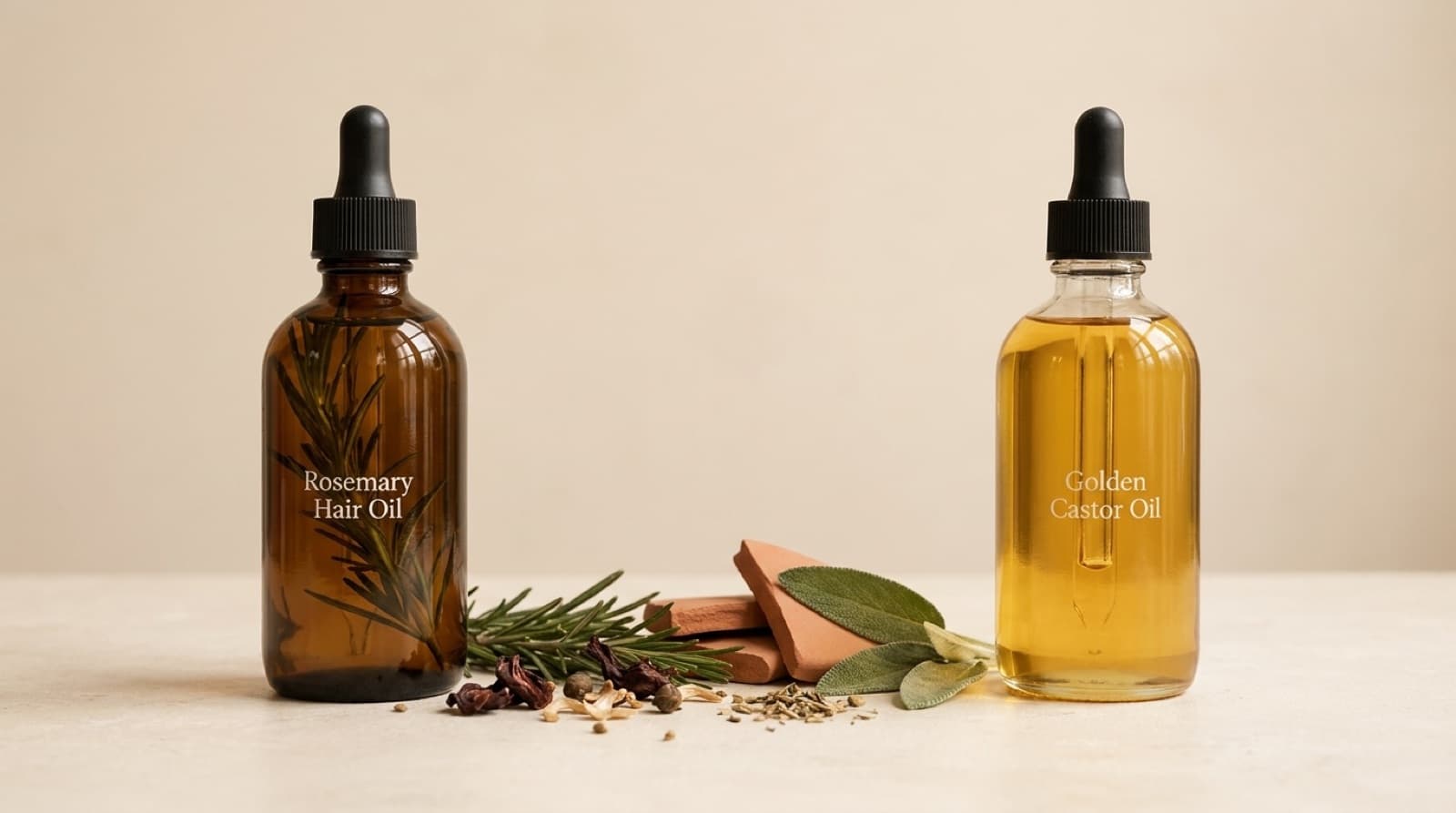
If you have ever stood in the hair-care aisle (or scrolled it at midnight) wondering whether to reach for rosemary oil or castor oil, you are not alone. These two are the most talked-about oils in the natural hair world, and for good reason: both have loyal followings of people who love how their hair looks and feels after using them. But they are not the same, and they do not do the same job.
In this guide we will break down rosemary oil vs castor oil honestly: how each one feels, where it works best, who it suits, and the question we get asked most: can you use them together? (Short answer: yes, and it is our favorite way to use them.) Let's get into it.
Quick answer
Rosemary oil is a lightweight scalp oil prized for that fresh, invigorated feeling and the look of fuller hair over time. Castor oil is a thick, rich oil that coats and conditions the strands for shine and softness. Neither is strictly 'better' — they do different jobs. The smartest move is a balanced blend that captures both benefits without castor's heaviness.
Rosemary oil vs castor oil: the side-by-side
Here is the fastest way to see how the two compare. Read this first, then dig into the sections below for the details.
| Rosemary oil | Castor oil | |
|---|---|---|
| Best for | The look of fuller, denser hair; a refreshed scalp | Shine, softness, and conditioning the lengths |
| Texture | Light and fluid, absorbs quickly | Very thick, heavy, slow to absorb |
| Scalp vs strands | A scalp-focused oil (massage it in) | A strand-focused oil (coats hair shafts) |
| How often | Several times a week, leaves no residue | Once or twice a week; a little goes a long way |
| Downside | Can feel drying alone on very thirsty hair | Sticky, can weigh hair down or feel greasy |
| Who it suits | Thin, fine, or oily hair types; scalp-care fans | Coarse, dry, curly, or color-treated hair |
What rosemary oil actually does for hair
Rosemary is a fresh, herbaceous essential oil that people reach for when they want that tingly, awake feeling on the scalp. It is light, it absorbs fast, and it does not leave a film behind, which is why it has become the darling of fine-haired and oily-scalp folks who can't tolerate heavy products.
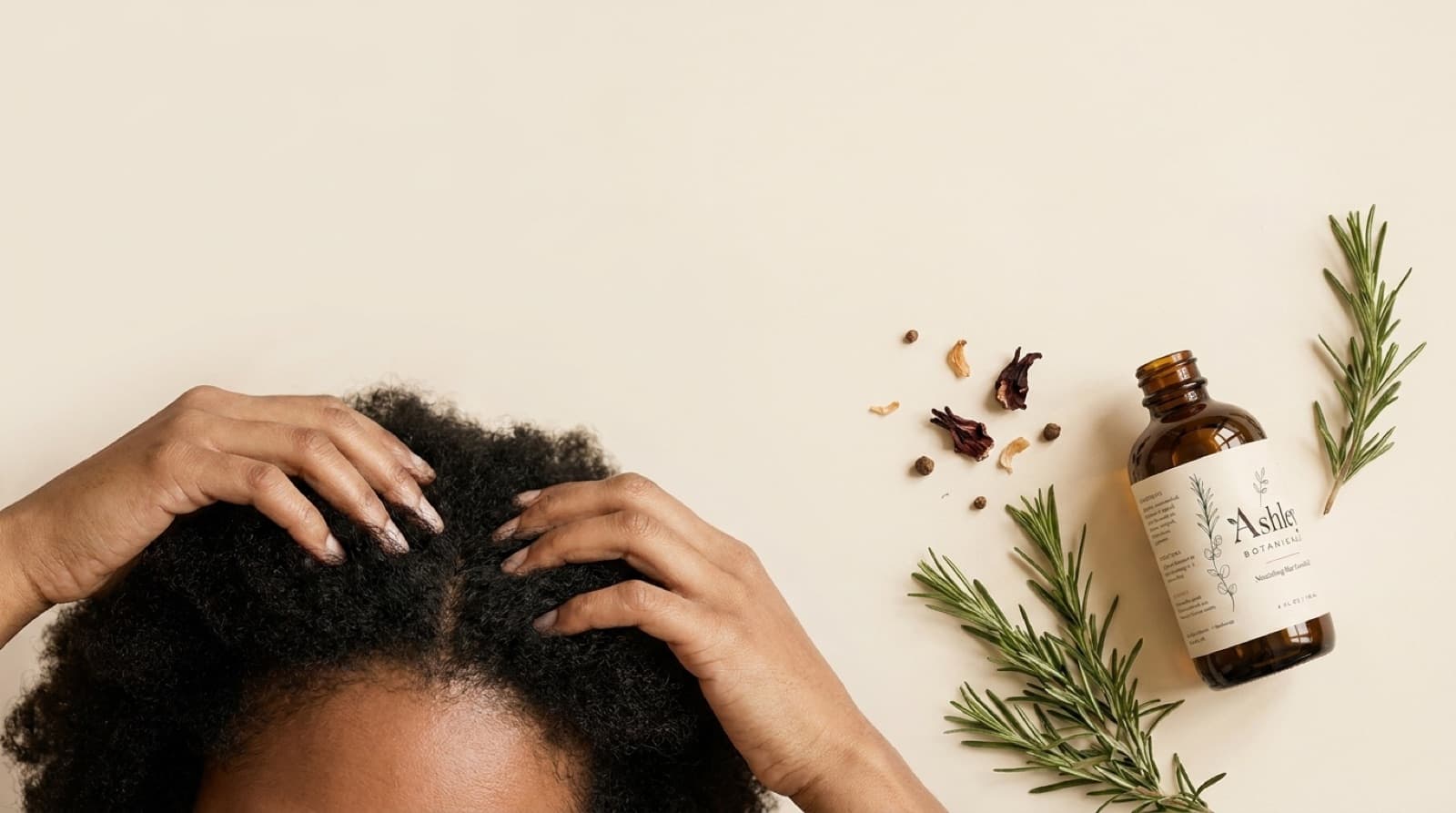
Most fans use it as part of a scalp-massage ritual, because the act of massaging plus a fresh-feeling oil makes the scalp feel cared for and the hair look fuller and more vibrant over time. If you want the deeper story on the buzz, read does rosemary oil stimulate hair growth and our practical walkthrough on how to use rosemary oil for hair growth.
One thing to know
Pure rosemary essential oil is potent and should never go straight onto your scalp undiluted. It is always blended into a gentle carrier oil first — which is exactly why thoughtful pre-made blends exist.
What castor oil actually does for hair
Castor oil is the heavyweight of the two — literally. It is thick, glossy, and rich, and it works by coating the hair shaft so strands look shinier and feel softer, smoother, and more defined. It is a longtime favorite for sealing in moisture on the ends and taming that dry, brittle look.
That richness is its superpower and its catch. On coarse, curly, or very dry hair, castor oil feels like a drink of water. On fine or oily hair, the same oil can feel sticky and weigh everything down. The trick is using a small amount and focusing it on the lengths and ends, not the scalp. We cover application in detail in our guide to castor oil for hair.
Rosemary or castor oil for hair: which is better for growth?
This is the real question behind the comparison — which is better for hair growth, rosemary oil or castor oil? The honest answer: they support different parts of the picture, so 'better' depends on what your hair needs.
- Choose rosemary if your priority is the scalp and the look of fuller, denser hair — especially if you have fine or oily hair and hate heavy products.
- Choose castor if your priority is the strands — shine, softness, and conditioning lengths that look dry, dull, or brittle.
- Choose both if you want healthy-looking scalp and strands, which is most of us.
Here is how to match an oil to your goal at a glance:
| Your goal | Lean rosemary | Lean castor | Best: a blend |
|---|---|---|---|
| Fuller-looking, denser hair | Yes | - | Yes |
| Shine and soft, smooth strands | - | Yes | Yes |
| Refreshed, balanced scalp | Yes | - | Yes |
| Conditioning dry ends | - | Yes | Yes |
| Lightweight, no greasy feel | Yes | - | Yes |
Can you use rosemary and castor oil together?
Yes — and they genuinely complement each other. This is the part most comparison articles bury, but it is the most useful takeaway: you do not have to pick a side. Rosemary brings the light, fresh, scalp-focused side; castor brings the rich, conditioning, strand-focused side. Together they cover the whole head of hair instead of just one part of it.
When you mix rosemary and castor oil, the rosemary also helps cut some of the castor's heaviness, so the blend feels less sticky than castor on its own. The catch with DIY mixing is getting the ratio right — too much castor and it is greasy, too much rosemary and it can feel drying. That balance is hard to nail at the kitchen counter.
The goal was never one perfect oil — it was the right balance of several, so your scalp and your strands both get what they need.— Ashley, Founder of Ashley Botanicals
Why a balanced blend beats picking just one
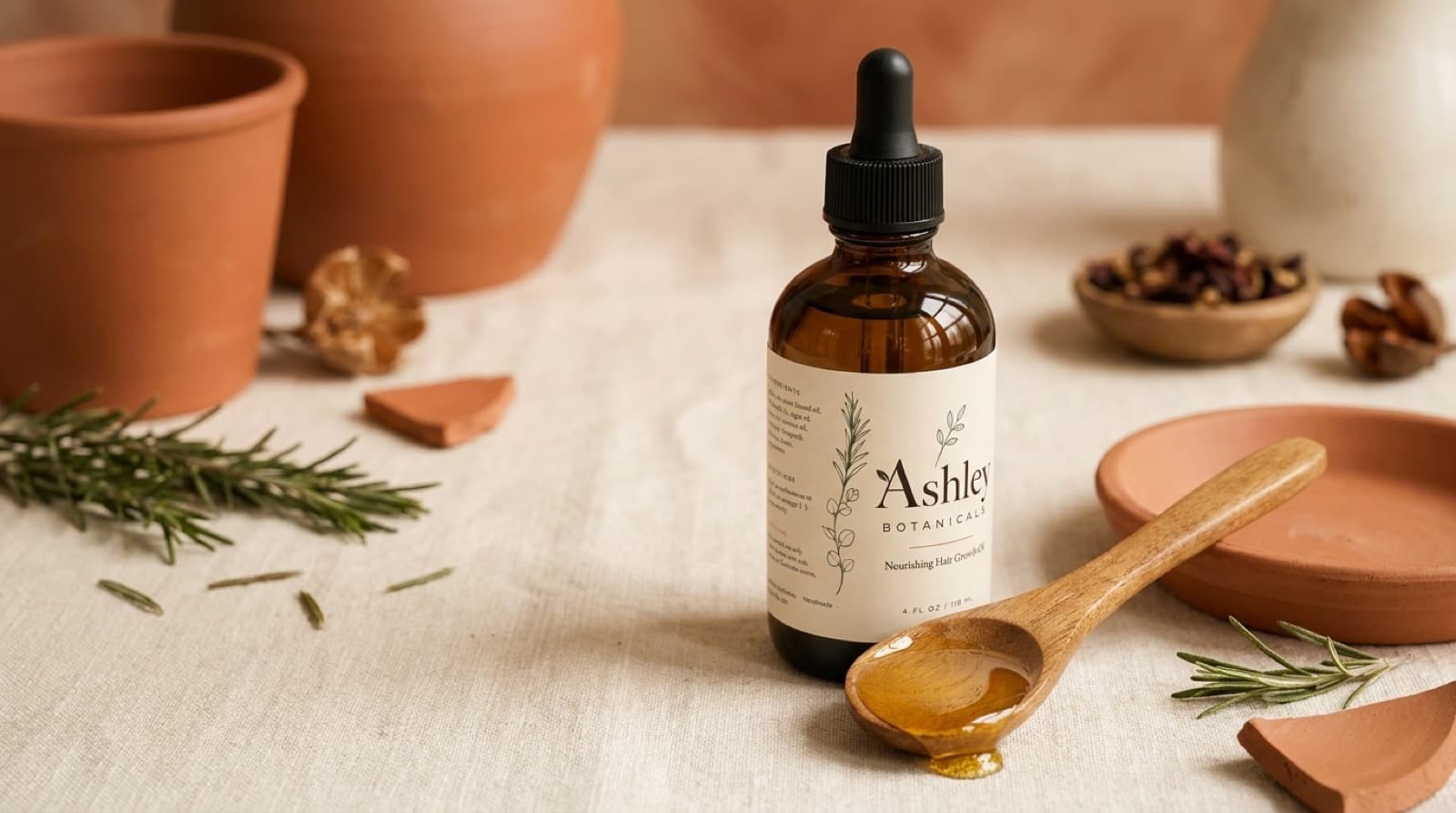
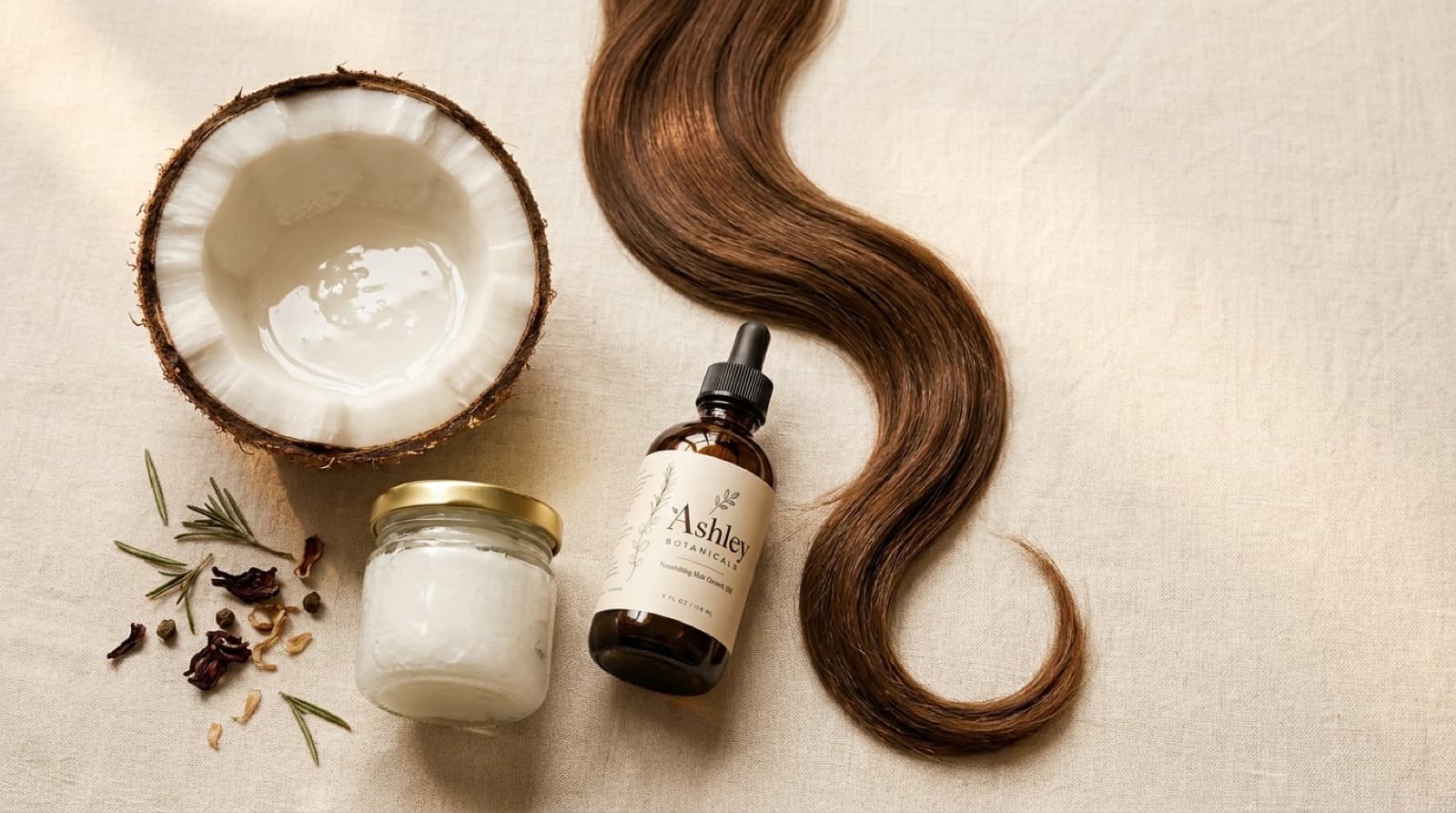
This is exactly why we built our hair growth oil the way we did. Instead of forcing you to choose rosemary or castor, our handmade blend combines both — plus black seed, fenugreek, argan, and hibiscus — at ratios tuned so you get the fresh scalp feel of rosemary and the conditioning richness of castor, without the greasy weight castor brings on its own.
- Rosemary for that invigorated scalp feel and the look of fuller hair.
- Castor for shine, softness, and smoother-looking strands.
- Argan and hibiscus to keep the blend light and easy to absorb.
- Black seed and fenugreek rounding out a nourishing, scalp-loving oil.
At $24.99 for a 4 fl oz bottle, it is meant to be the one step that replaces the experiment — no measuring, no guessing at ratios, no sticky aftermath. Just massage it in, leave it, and let your hair look and feel its healthiest.
The takeaway
Rosemary oil vs castor oil is not really a contest — it is a partnership. Rosemary cares for the scalp and the look of fullness; castor conditions and adds shine to the strands. A balanced blend gives you both without the heaviness. For external use only. Avoid contact with eyes. Stop use if irritation occurs.