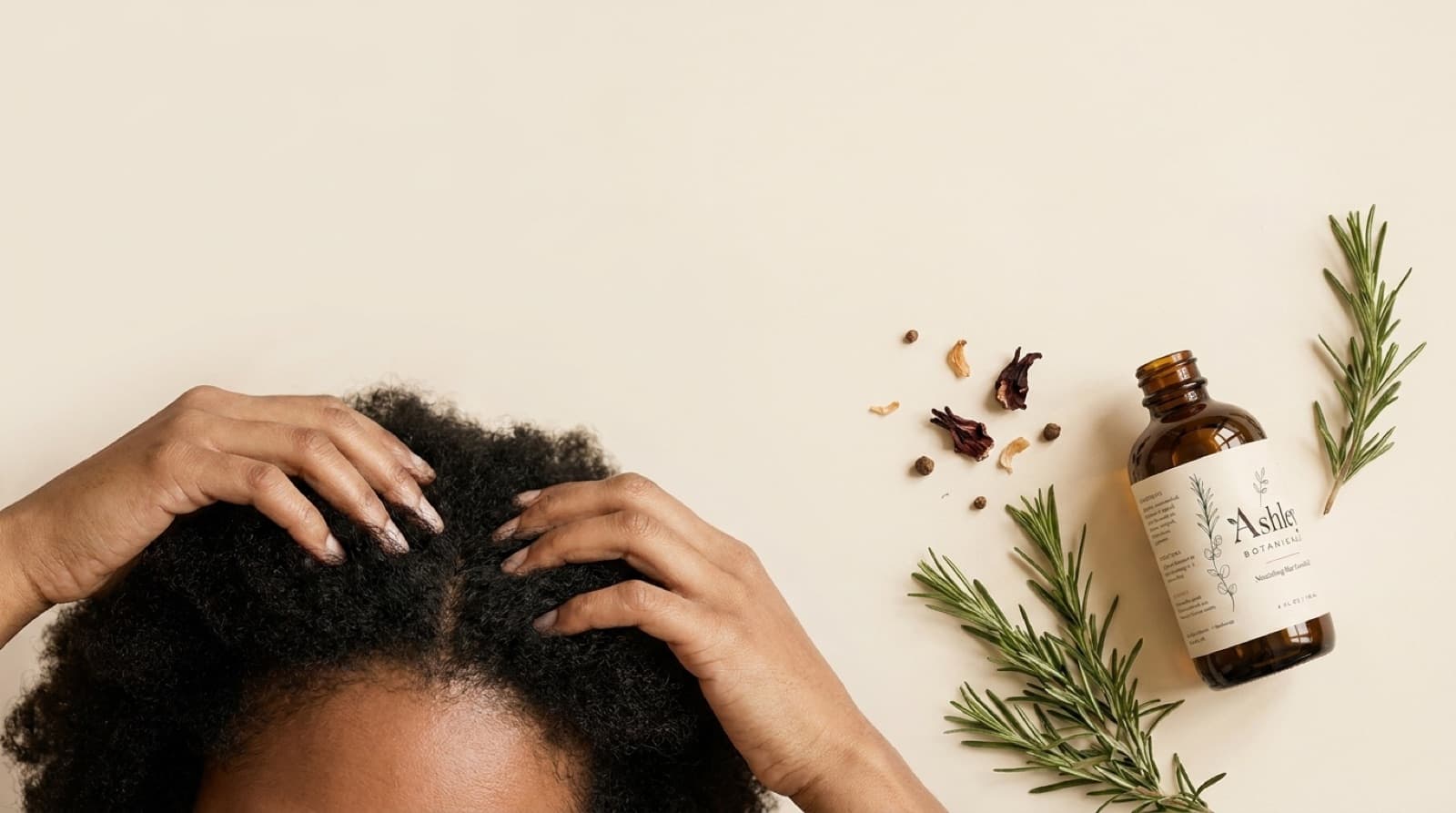
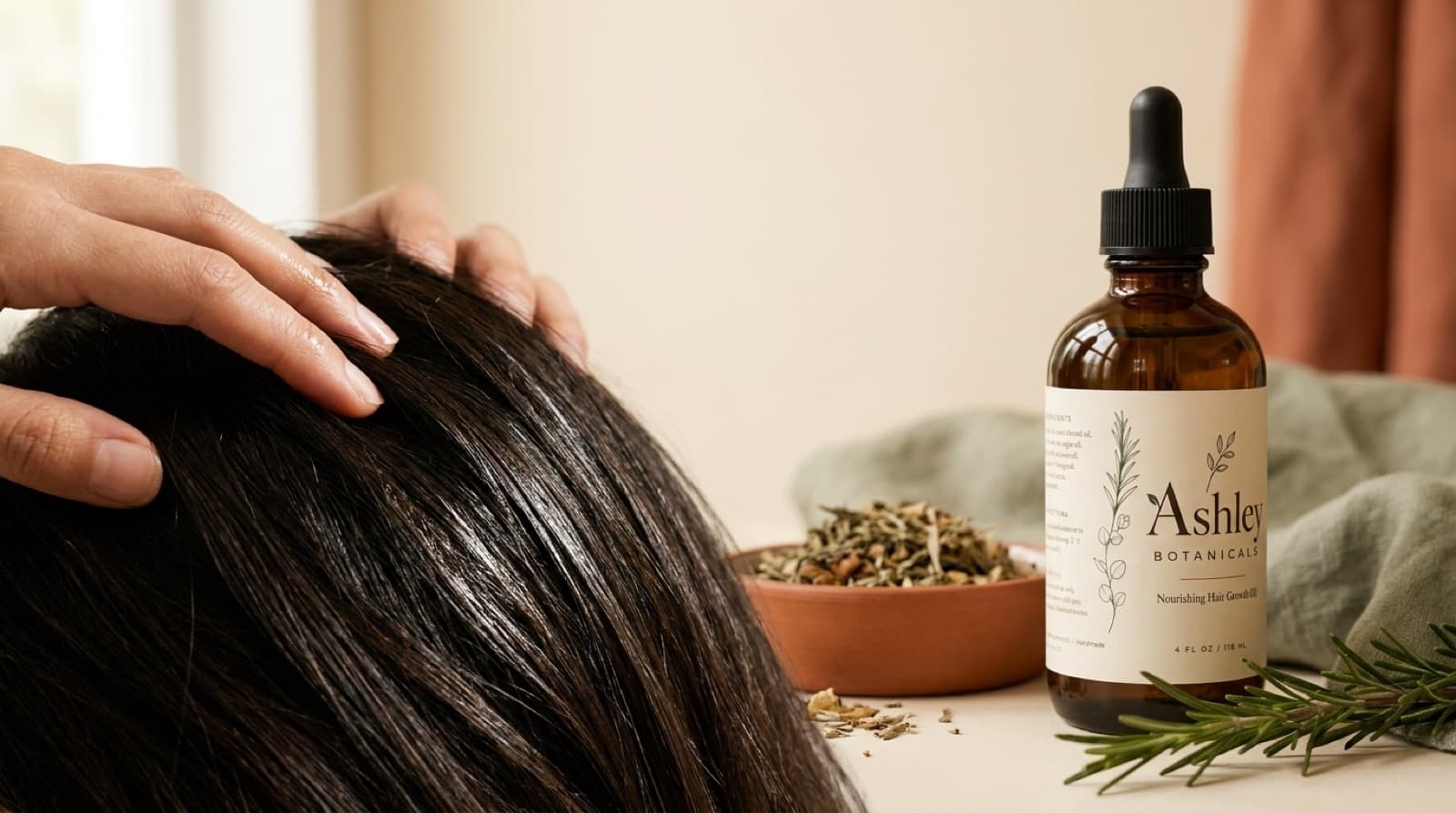
There is something quietly powerful about pressing your fingertips into your scalp at the end of a long day. It feels good, it slows your breathing, and it just so happens to be one of the simplest rituals you can add to your hair-care routine. Scalp massage for hair growth has earned a loyal following for good reason: it is gentle, it costs nothing but a few minutes, and it turns ordinary hair care into something that actually feels like self-care.
In this guide we will walk through what scalp massage can (and cannot) do, the exact technique to use, how long and how often to massage, whether to do it dry or with oil, and the small mistakes that quietly undermine your effort. We will also show you how to fold it into the Ashley Botanicals ritual so your massage and your oil work together as one calming step.
Quick Answer
Massage your scalp for about 4 to 5 minutes per session using your fingertips (not nails) in slow, circular motions with light to medium pressure. Aim for once a day, or at minimum 3 to 4 times a week. For an elevated ritual, massage a few drops of botanical oil in 2 to 3 times a week and let it absorb.
Does Scalp Massage Help Hair Growth?
Let's be honest and clear: scalp massage is not a magic switch, and no massage can promise to regrow hair. What it can do is support a healthier scalp environment and the overall look and feel of fuller, well-cared-for hair. Massaging stimulates the surface of the scalp, helps loosen buildup and flakes, and encourages you to slow down and pay attention to an area most of us ignore.
Many people also find massage relaxing, which matters more than it sounds. A calmer evening routine is something you will actually stick with, and consistency is the real secret behind any hair ritual that delivers visible results over time.
Scalp Massage Benefits
Beyond the cosmetic appeal of healthier-looking hair, a regular scalp massage offers a handful of feel-good and practical perks:
- Promotes a relaxed, spa-like moment that lowers daily stress and tension.
- Helps gently lift product buildup, oil, and flakes so the scalp feels clean and refreshed.
- Improves how evenly oils and treatments distribute from root to mid-length.
- Encourages a healthier-feeling scalp, which is the foundation for hair that looks fuller and shinier.
- Creates a consistent, repeatable habit you genuinely look forward to.
How to Massage Your Scalp for Hair Growth (Step by Step)
The technique matters more than the speed. The goal is slow, deliberate movement, not a frantic scrub. Here is a simple sequence you can follow in about five minutes:
- Find a comfortable, quiet spot. Sit upright or tilt your head slightly forward to relax your neck.
- Place the pads of your fingertips (never your nails) firmly on your scalp, spreading your hands so your fingers cover a wide area.
- Using light to medium pressure, move your fingertips in small, slow circles. Keep your fingers anchored to the scalp and move the skin itself rather than sliding across the hair.
- Work in sections: start at the front hairline, move along the sides, then the crown, and finish at the nape of the neck.
- Spend extra time on any areas that feel tight or tense, like the temples and base of the skull.
- Continue for 4 to 5 minutes, breathing slowly. Finish with a few light, sweeping strokes from front to back.
If you are using product, this is the moment to work it in. Learning how to use rosemary oil for hair growth the right way makes the massage doubly worthwhile, because the motion helps the oil settle into the scalp instead of just sitting on the surface.
Massage Techniques Compared
There is no single correct method. Different techniques suit different moods, hair types, and amounts of time. Here is a quick reference:
| Technique | How to Do It | Best For |
|---|---|---|
| Circular fingertip | Small, slow circles with finger pads, moving the scalp skin | Daily go-to method, relaxation, even oil distribution |
| Kneading / pinch | Gently grasp and release sections of scalp with fingers and thumb | Releasing tension at the crown and nape |
| Tapping / drumming | Light, rhythmic taps with fingertips across the scalp | A quick wake-up massage in the morning |
| Tool-assisted | Use a silicone scalp massager brush in circular motions | Deeper-feeling massage, scrubbing buildup, oily roots |
Scalp Massage With Oil vs. Dry
Both have their place, and the right choice depends on your goal for that session.
Dry Massage
A dry massage is perfect for a quick daily reset, a morning pick-me-up, or whenever you simply want to relieve tension without changing your hair's look. It is fast, mess-free, and easy to do at your desk or before bed.
Massage With Oil
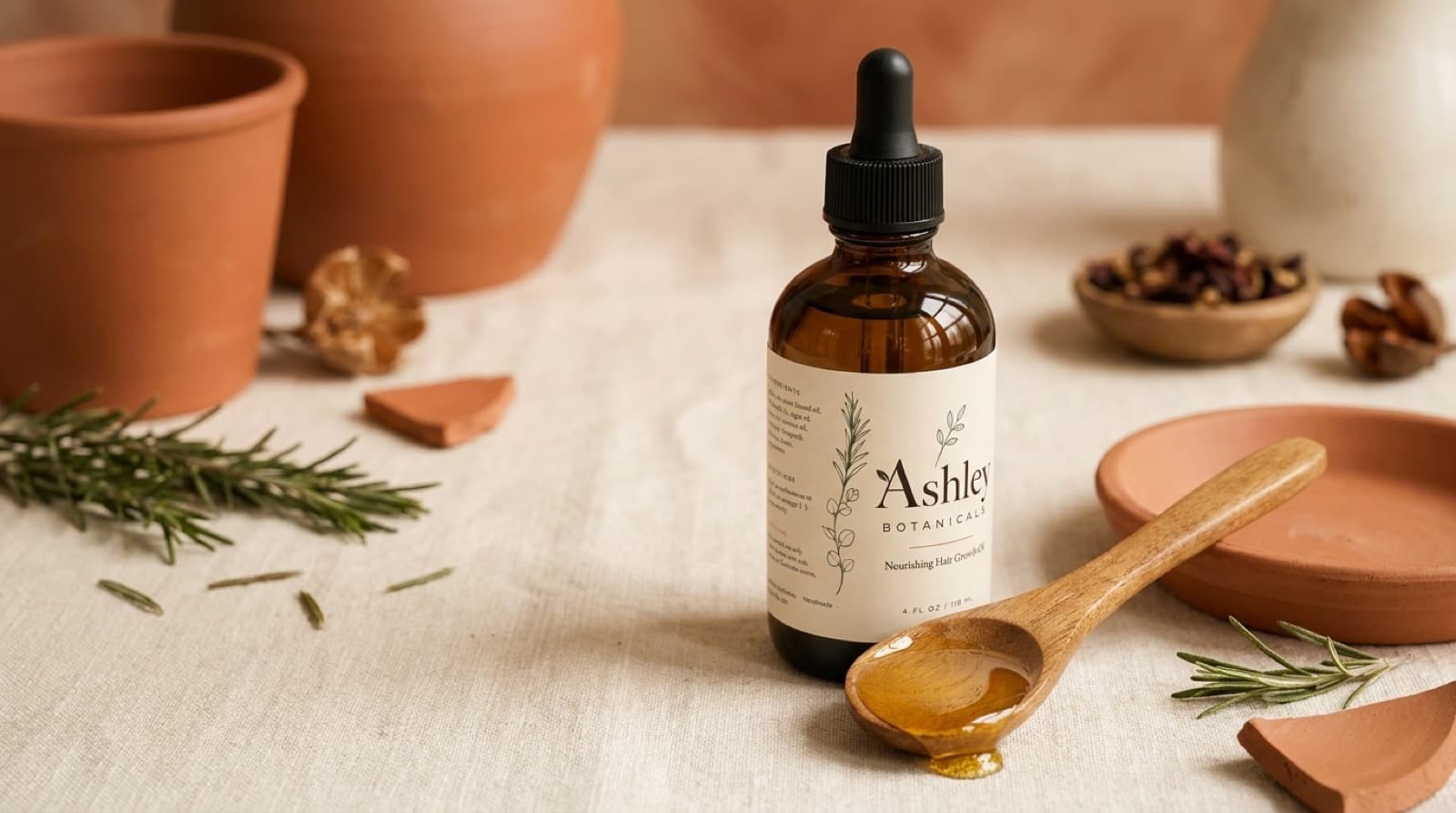
Massaging with oil turns the ritual into a nourishing treatment. The slip of the oil reduces friction, so your fingers glide and tug less on the hair, and the massaging motion helps carry the oil down to the scalp where it can do its work. This is where the Ashley Botanicals blend of rosemary, castor, black seed, fenugreek, argan, and hibiscus shines: a few drops massaged in transforms a plain massage into a fragrant, conditioning moment. If your strands feel fine or sparse, pairing massage with the right hair oil for thinning hair can make the whole routine feel more intentional and indulgent.
The Ashley Botanicals Ritual
Warm 4 to 6 drops of oil between your palms, part your hair into a few sections, and apply the oil directly to the scalp. Then massage it in with slow circular motions for about 5 minutes. Leave it on for at least 30 minutes (or overnight) before washing. Repeat 2 to 3 times a week.
How Long and How Often Should You Massage Your Scalp?
Consistency beats intensity every single time. A short daily massage will always outperform an occasional marathon session. Here is a simple weekly rhythm you can follow:
| Day | Type | Duration |
|---|---|---|
| Monday | Dry massage | 4-5 min |
| Tuesday | Oil massage (botanical blend) | 5 min + leave-on |
| Wednesday | Dry massage | 4-5 min |
| Thursday | Rest or light tapping | 2-3 min |
| Friday | Oil massage (botanical blend) | 5 min + leave-on |
| Saturday | Dry or tool-assisted massage | 5 min |
| Sunday | Oil massage before wash day | 5 min + overnight |
If a daily massage feels like too much, do not worry. Three to four sessions a week is plenty to build a meaningful habit. The key is to keep it gentle and keep it regular.
Using a Scalp Massager Tool
A simple silicone scalp massager brush can make the experience feel deeper and more thorough, and it is especially handy in the shower for working shampoo through the roots. To use one well:
- Apply light, even pressure and let the soft bristles do the work, no pressing hard.
- Move in small circles, the same way you would with your fingertips.
- Use it on a wet, lathered scalp for cleansing, or on a dry scalp to loosen buildup before applying oil.
- Rinse and dry the tool after each use to keep it clean.
Your fingertips are always the best tool you own, but a massager can be a lovely upgrade when you want a little extra on wash day.
Common Scalp Massage Mistakes to Avoid
- Using your nails. Nails scratch and irritate the scalp; always use the soft pads of your fingertips.
- Pressing too hard. More pressure does not mean more benefit, and aggressive rubbing can tangle and stress the hair.
- Rushing through it. A 30-second scrub will not give you the relaxation or the even oil distribution you are after.
- Skipping days for a week, then overdoing it. Steady, gentle consistency wins over sporadic intensity.
- Drowning your scalp in oil. A few drops are plenty; too much leaves residue and a greasy feel.
- Massaging an irritated or broken scalp. Wait until any irritation clears before resuming.
The best hair ritual is the one you actually look forward to. Five slow minutes with your fingertips can be the calmest part of your whole day.
Make It a Ritual You Love
Scalp massage is one of the rare hair-care steps that rewards you immediately. It feels wonderful in the moment, it supports the look and feel of a healthier scalp, and over time it becomes a grounding little ceremony you genuinely anticipate. Pair it with a thoughtfully made botanical oil, keep it gentle and consistent, and let it be your nightly signal to slow down.
For external use only. Avoid contact with eyes. Stop use if irritation occurs.